








‘ Make do and Mend’ campaign of the Second World War, was launched to encourage people to make their existing supplies of clothes last longer. A lot of advice given at the time I believe is timeless and can still be useful and applied at peacetime such as we have now .
Posters and leaflets were circulated with advice on subjects including how to prevent moth damage to woollens, how to make shoes last longer or how to care for different fabrics. As the war went on, buying new was severely restricted by coupon limits and no longer an option for many people. The ability to repair, renovate and make one’s own clothes became increasingly important. Although shoppers would have to hand over coupons for dressmaking fabric as well as readymade clothes, making clothes was often cheaper and saved coupons. ‘Make do and Mend” classes took place around the country, teaching skills such as pattern cutting. Dress makers and home sewers often had to be experimental in their choice of fabrics. Despite disliking much of the official rhetoric to Make do and Mend, many people demonstrated great creativity and adaptability in dealing with the rationing. Individual style flourished. Shortages necessitated imaginative use of materials, recycling and renovating of old clothes and innovative use of home-made accessories, which did not need points, was also sometimes used. Parachute silk was highly prized for underwear, nightclothes and wedding dresses.
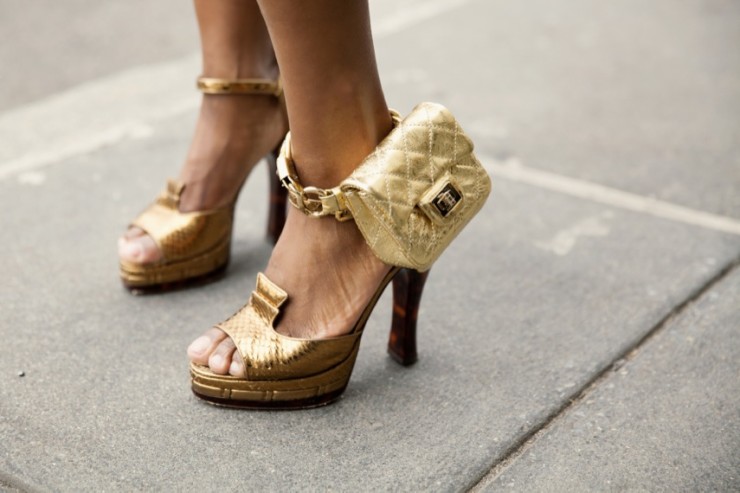
One way to recycle or renovate an item without going to extremes- as the above examples, is by wearing an item a different way. Such as this Chanel wristlet bag that can be worn at the ankle as well- for a fashion forward look. What are some of your go to ideas for recycling your wardrobe?


